
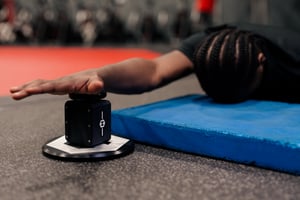
Portable dynamometry has changed the game for strength testing. With tools like the Hawkin TruStrength, clinicians can now capture high-quality force data outside of traditional labs, whether that’s on the gym floor, in a clinic, or even on the sideline. But as we discussed in a previous blog, portability alone doesn’t guarantee accurate or reliable data. The way the device is set up, whether it’s fixed, semi-fixed, or unfixed (hand-held), can dramatically affect the results you’re collecting.
Hand-held dynamometry (HHD) became popular because it’s fast, accessible, and cost-effective. But the research (and decades of clinical experience) shows multiple limitations: tester strength influencing outcomes, inconsistent bracing or leverage, subtle shifts in body position, and greater inter-rater variability. These issues contribute to both biological variability (e.g., differences between testers) and technological variability (e.g., how the device is held or stabilized). Ultimately, unfixed testing often underestimates force, especially in strong individuals or larger muscle groups. True fixation minimizes both biological and technological variability, leading to higher forces, more stable pre-tensions, stronger agreement with isokinetic dynamometry, and superior inter-rater reliability. In fact, true fixation will eliminate a major source of biological variability, you, the tester.
In the first blog, we broke down why this occurs, but we didn’t cover:
How big is the difference in real testing?
Does tester strength actually influence the data?
What do fixed vs unfixed results look like in practice?
So in this blog, we move from concept to evidence.
Using the Hawkin TruStrength, we collected data across three conditions:
- A fully fixed setup (Figure 1A)
- A female assessor performing hand-held testing (Figure 1B)
- A male assessor performing hand-held testing (Figure 1C)
This allowed us to directly quantify the impact of tester strength, bracing stability, and the presence (or absence) of fixation, showing exactly how each method changed the force output. Here is a brief testing overview:
- Single participant (trained male, 60s)
- Same limb, same session
- Same device (Hawkin TruStrength), same assessor instructions
- Same joint angles, same seating, same warm-up
Let’s break down what we found.
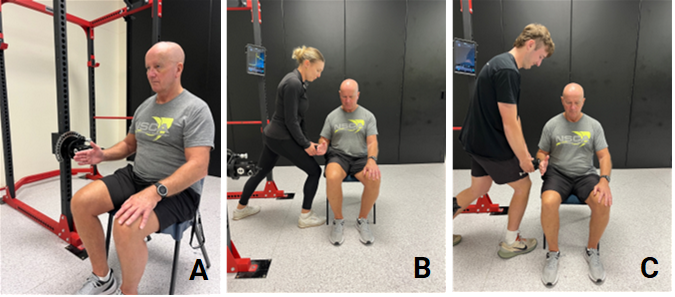
Figure 1: A = Fixed set up, B = HHD female assessor, C = HHD male assessor
Shoulder Testing
Let’s start with a shoulder external rotation assessment. The client is a trained male in his 60s. To start, we got him to perform a standardized seated external rotation shoulder assessment under the three conditions mentioned above. We had the client perform three maximal isometric contractions (3 seconds). Let’s take a look at his force-time graphs…
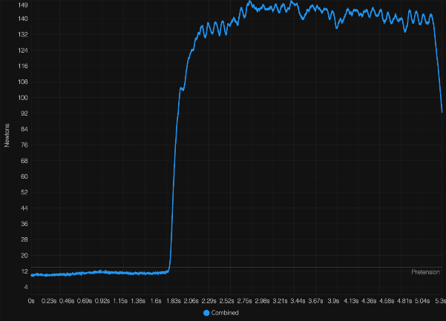
Figure 2: Fixed set up force-time signal for a shoulder external rotation assessment
Let’s start by looking at the signals. In Figure 2, you can see an example of a force-time signal that was collected during a fixed set up of the external shoulder rotation assessment. What do you notice about the signal? First, you can see a steady rise in force, and the client's ability to hold that force for the entire 3-second contraction is evident, i.e., no force leakage in the system. Now let’s take a look at a force-time signal from the HHD set up with a female assessor (see Figure 3). What are you seeing?
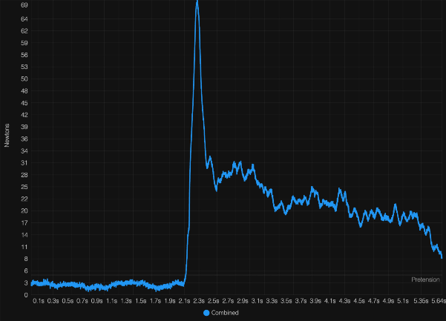
Figure 3: Hand-held set up (female assessor) force-time signal for a shoulder external rotation assessment
You can see an initial rise and peak in force, followed by a noticeable drop-off. This pattern suggests “give” within the testing system—where force is being absorbed through movement of the assessor’s body, joint yielding, or soft tissue compression—rather than being fully transmitted to the dynamometer. This compliance makes it difficult to sustain force across the entire contraction and results in force leakage. A reasonable question is whether increasing assessor size or body mass, such as using a larger, heavier assessor, reduces this system compliance and improves force transmission. Let’s take a look…
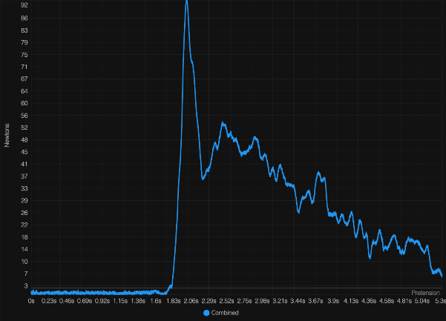
Figure 4: Hand-held set up (male assessor) force-time signal for a shoulder external rotation assessment
As you can see in Figure 4, the same thing is happening. We see a large spike in force at the beginning of the contraction, followed by a rapid decline. Now that we have had a good look at the signals, let’s see what the numbers are telling us…
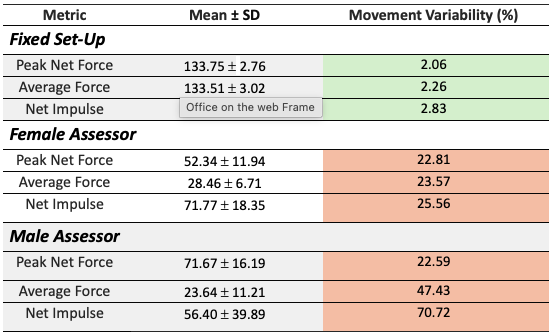
In Table 1, you can see the mean and standard deviation for three different metrics that are calculated with Hawkin TruStrength. As you can see, the force readings also differ significantly between methods. Peak net force (i.e., Peak force – pre-tension) is ~87% higher in the fixed position compared to the female assessor, and ~60% compared to the male assessor. These differences get even larger when we look at the average force (i.e., the mean force applied during the repetition) and impulse (i.e., the net total impulse (area under the force-time curve to the pretension line applied during the repetition) measures, which makes sense given the rapid decline in force when we look at the hand-held signals (Figures 3 and 4) compared to the stable signal we see with the fixed set up (Figure 2). Because average force and impulse depend on the ability to sustain force across the contraction, even brief losses in stability disproportionately reduce these metrics, making hand-held testing especially problematic when clinicians rely on mean force or impulse rather than peak values alone.
We then calculated his movement variability using the following equation:
𝑆𝑡𝑎𝑛𝑑𝑎𝑟𝑑 𝐷𝑒𝑣𝑖𝑎𝑡𝑖𝑜𝑛 ÷ 𝑀𝑒𝑎𝑛 × 100
Movement variability reflects how repeatable the measurement is across trials. In clinical terms, variability above ~10–15% makes it difficult to detect real change over time, meaning improvements or regressions may be masked by measurement error/noise rather than true physiological change.
As you can see, his movement variability is low (less than 5%) for all three metrics for the fixed set-up. If you look below that, you can see that his movement variability has increased significantly (22-71%) when being assessed via the HHD method.
A note on assessor differences:
It’s important to clarify that these findings are not about assessor sex, but about the physical demands placed on the assessor during unfixed testing. In hand-held dynamometry, body mass, stance, leverage, and the ability to brace against high forces all influence the stability of the measurement. Even with a larger, heavier assessor, the hand-held setup remained unstable compared to the portable fixed dynamometer set up. This highlights a key limitation of unfixed testing: the outcome is constrained not only by the athlete’s strength, but by the assessor’s ability to resist it.
Table 1: Comparison between fixed, HHD female assessor, and HHD male assessor for isometric shoulder external rotation force variables
As you can see from both the signals and the numbers, using HHD for testing can be problematic due to several reasons:
- The client and assessor can struggle to create a stable force signal for the entire contraction duration resulting in a lot of force leakage.
- The movement variability is poor (>20%) with the HHD method.
- Maximal and average force, as well as impulse are significantly underestimated with the HHD method compared to the PFD method.
Now let’s see what happens when we want to test a larger group of muscles. In the next test, we got the client to perform a 90-degree quadricep extension.
Quadricep Testing
We had the client perform a standardized seated 90-degree quadricep extension test under the same three conditions (fixed, female assessor, and male assessor) (see Figure 5).
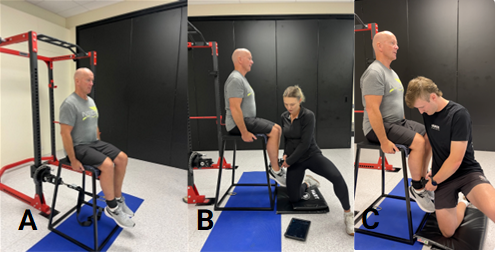
Figure 1: A = Fixed set up, B = HHD female assessor, C = HHD male assessor
Once again, we had him perform three maximal isometric contractions (3 seconds). Let’s take a look at his force-time graphs…
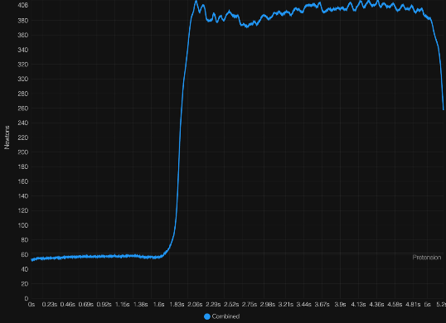
Figure 6: Fixed set-up force-time signal for a 90-degree knee extension assessment
In Figure 6, you can see an example of a force-time signal that was collected during a fixed set-up of the 90-degree knee extension assessment. I’m sure you’re thinking that this force-time signal looks relatively similar to Figure 1, i.e., stable, as the athlete can hold near peak force for the entire test duration. Now, I’m sure you can guess what the HHD force-time signal looks like, but let’s take a quick look…
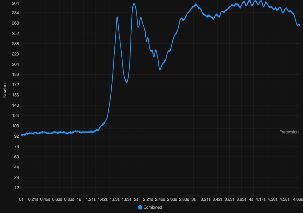
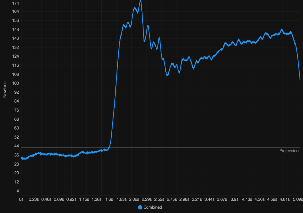
Figure 7: A = HHD female assessor (left), B = HHD male assessor (right)
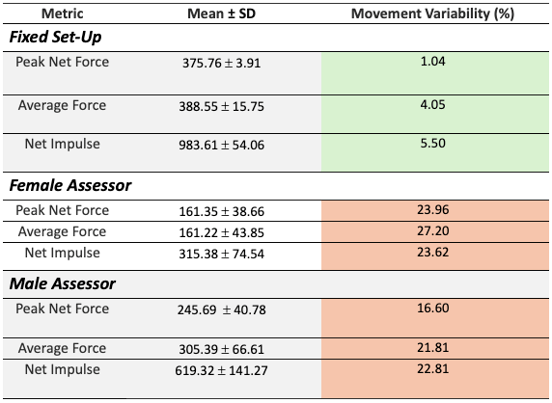
As you can see in Figure 7, we are once again seeing unstable force-time signals from using HHD, compared to a fixed set-up. In Table 2, you can see the peak net force, average force, and net impulse values. As you can see, the force readings also differ significantly between methods. Peak net force is ~80% higher in the fixed position compared to the female assessor, and ~41% compared to the male assessor. These differences get even larger when we look at the impulse measure (103% and 45%), which makes sense given the decline in force and unstable force signals when we look at the hand-held signals compared to the stable signal we see with the fixed set-up.
Once again, the movement variability is low for all three metrics for the fixed set-up. However, his movement variability increases significantly with the HHD set-ups (16-27%), compared to the portable fixed set-up (1-6%).
Table 2: Comparison between fixed, HHD female assessor and HHD male assessor for isometric knee extension force variables
Clinical Implications: What This Means for Practice
The findings from both the shoulder and quadriceps assessments highlight a critical point for clinicians: the setup of your dynamometer can meaningfully change the data you collect. Across two different joints and vastly different force demands, fixed dynamometry consistently produced higher force outputs, more stable force-time signals, and substantially lower movement variability compared to hand-held testing, regardless of assessor.
When Fixed Dynamometry Should Be the Default
Based on the results presented here, fixing your dynamometer should be considered essential when:
- Monitoring rehabilitation progress over time, where small but meaningful changes in strength matter.
- Comparing limbs or assessing asymmetry, where measurement noise can mask true differences.
- Working with strong or athletic populations, particularly when testing large muscle groups.
- Using time-dependent metrics such as average force, impulse, or rate-based measures.
- Making return-to-play or progression decisions, where confidence in the data is critical.
- Operating in multi-clinician environments, where inter-rater variability can influence results.
In these situations, unfixed testing introduces unnecessary biological and technological variability, making it difficult to determine whether changes in force output reflect true physiological adaptation or simply measurement error.
Why Looking Beyond Peak Force Matters
One of the most important insights from this analysis is that peak force alone does not tell the whole story. While peak values are often reported, metrics such as average force and impulse depend on the athlete’s ability to sustain force throughout the contraction. As shown in the hand-held conditions, even brief losses in stability can lead to large reductions in these time-dependent metrics.
Fixed dynamometry provides a stable interface that allows the athlete to push or pull against a consistent resistance, resulting in:
- Cleaner force-time curves
- More stable baselines and pre-tension
- More accurate average force and impulse values
For clinicians relying on these metrics to guide training loads, monitor fatigue, or track rehabilitation progress, fixation becomes essential.
Important Context and Limitations
This analysis represents a single-participant case example using one device and one testing session. While the magnitude of the differences observed may vary across individuals and populations, the direction and pattern of the results are consistent with the broader dynamometry literature. Importantly, the instability and force underestimation observed with hand-held testing became more pronounced as force demands increased, reinforcing the need for fixation when testing stronger individuals or larger muscle groups.
Conclusion
Portable dynamometry has brought strength testing out of the lab and into real-world clinical and performance settings, but as this data shows, how you use the device matters just as much as having one. Unfixed, hand-held testing introduces variability from bracing, leverage, and assessor limitations that can underestimate true strength and obscure meaningful change. By contrast, fixing the device produces cleaner force-time signals, lower variability, and measurements that better reflect an athlete’s or patient’s true capacity. With its ability to be securely anchored, zeroed in position, and used across both compressive and tensile tests, Hawkin TruStrength gives clinicians the flexibility to collect high-quality, reliable data in any environment, without sacrificing portability.
When accuracy, repeatability, and confidence in your decisions matter, fixing the device isn’t just a preference; it’s best practice.
Author: Dr. Chloe Ryan
Co-Authors: Daniel Partridge and Prof. John Cronin