-2.png?width=156&height=60&name=Hawkin%20Logo%20(2)-2.png)
-1.png?width=155&height=60&name=WHITE.Horizontal_Logo.Transparent%20(3)-1.png)
Residual Plantar-Flexor Explosive Deficits after Symptom Resolution in a Professional Tennis Player with Chronic Insertional Achilles Tendinopathy: A Force Plate Case Report
Main author: Karol Kruczek - Next Generation Performance (Kraków, Poland); karolkruczekpl@gmail.com
Co-author: Jakub Jabłoński - Alab Clinic (Warsaw, Poland); jakjablonski@gmail.com
Introduction
In professional tennis, return-to-play (RTP) decisions are often complex and consequential. In many settings, they are still anchored in relatively simple criteria such as elapsed time since injury and the athlete’s current pain rating. For lower-limb tendinopathy and other sports injuries, clinicians frequently specify minimum time frames for biological healing (eg, several months for tendon and muscle tissue) and use cut-offs on unidimensional pain scales such as the Visual Analog Scale (VAS) or Numeric Pain Rating Scale (NPRS), with low pain scores (typically ≤2/10) often operationalised as thresholds for progressing to running, jumping or full training (Hawker et al., 2011; Silbernagel and Crossley, 2015; Habets et al., 2018; Fernández Jaén and Guillén García, 2017; Wilk et al., 2020; Silbernagel et al., 2020). While such rules-of-thumb provide pragmatic guardrails, contemporary return-to-sport frameworks emphasise that RTP is a multifactorial, staged process and should not be determined solely by time elapsed or pain intensity on a VAS/NPRS (Ardern et al., 2016; Fernández Jaén and Guillén García, 2017; Habets et al., 2018; Wilk et al., 2020).
Authors present the case of a 26-year-old professional female tennis player who has battled recalcitrant left Achilles tendinopathy since 2018. The subject’s history is not one of acute trauma, but of chronic degeneration. When considered alongside its chronic time course, recurrent symptom pattern, loading history, and clinical presentation, this case aligns with the “degenerative” stage of the Cook and Purdam tendinopathy continuum (Cook and Purdam, 2009; Cook et al., 2016). Over seven years, the tendon may have undergone significant matrix remodeling, characterized by collagen disarray, increased ground substance, and neurovascular ingrowth, in line with contemporary descriptions of Achilles tendon adaptation and pathology (Finni et al., 2023; Malliaras and O’Neill, 2022).
However, in the milliseconds that define elite sport, the absence of pain is not synonymous with the presence of function. By utilizing high-fidelity kinetic diagnostics via the dynamometry ecosystem, the authors identified a neuromuscular deficit that was not evident from symptom resolution alone - a “silent deficit” in plantar-flexor performance. This case study illustrates how relying solely on pain resolution may be misleading and can overlook the complex neurobiology of chronic injury and the loose coupling between symptoms, structure, and function in tendinopathy (Cook and Purdam, 2009; Cook et al., 2016; McCreesh et al., 2013; Malliaras et al., 2015; Malliaras and O’Neill, 2022; Rio et al., 2015; Fernandes et al., 2021; Vallance et al., 2025).
She first completed a targeted 5-week block of Heavy Slow Resistance (HSR) training in Next Generation Performance Center (Kraków, Poland). The clinical result was seemingly very positive: she was asymptomatic, reported no morning stiffness, and expressed a subjective readiness to continue more comprehensive gym-based rehabilitation, which is consistent with the beneficial effects of high-load exercise reported in clinical trials and reviews on Achilles tendinopathy (Beyer et al., 2015; Radovanović et al., 2022; Kim et al., 2023)
Countermovement jump (CMJ) ground reaction forces were sampled at 1000 Hz using a wireless dual force plate system (Hawkin Dynamics, USA) and transmitted in real time to the web-based Hawkin Dynamics Cloud via the Android Hawkin Capture application (version 9.10.1, USA). This system has demonstrated excellent criterion validity and reliability for assessing CMJ performance compared with laboratory-grade force platforms (Badby et al., 2023; Dos’ Santos et al., 2024). The metrics discussed below are daily mean values calculated across all valid trials of each test. Crucially, the data analyzed below were collected on Day 2 of the assessment block. This ensured that the athlete was familiarized with the protocols, reducing motor learning artifacts (“learning effect”) and making it more likely that the observed asymmetries reflected physiological differences rather than coordinative variability. Given the athlete’s high movement competency and long history of structured athletic training, the assessor deemed it appropriate to condense the re-familiarization process to a single pre-testing session.
Overview of the kinetic test battery: Multi-Rebound (MR): 3 sets of 10 repetitions (10/3 protocol); Countermovement Jump (CMJ): 2 sets of 3 repetitions; Kneeling Isometric Plantar Flexor Test (KIPFT): 3 sets of 5-second maximal isometric contractions per side.
Limitations of Global Jump Tests for Detecting Plantar-Flexor Dysfunction
The first layer of assessment painted a very positive picture. During the bilateral countermovement jumps, braking and propulsive impulse asymmetries were minimal (-4% and 0%), and peak landing forces were almost identical (-5%). The late push-off phase of the CMJ - where ankle plantarflexion and Achilles stiffness play a dominant role - showed near-overlapping force-time curves for the left and right limb, and such jump-derived metrics are commonly used to monitor global neuromuscular status (Hori et al., 2009; Warr et al., 2020).

Figure 1.0. Countermovement jump (no arm swing) force-time curve. Best daily trial selected based on jump height
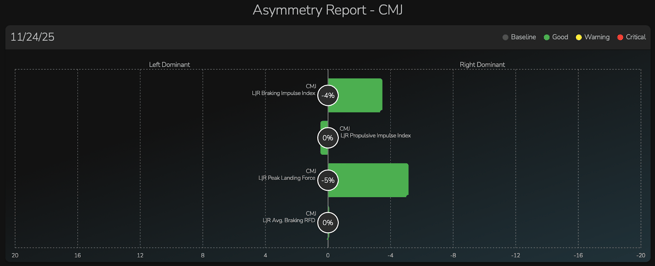
Figure 1.1. Asymmetry report for countermovement jumps (no arm swing). Summary of asymmetry metrics across six CMJ trials (2×3 protocol), with results presented as daily mean values
A multi-rebound protocol (a series of fast consecutive jumps) told a similar story. Combined vertical ground reaction force (vGRF) traces were clean and highly repeatable, and under each peak, the left and right contributions were almost indistinguishable (Flanagan and Comyns, 2008).
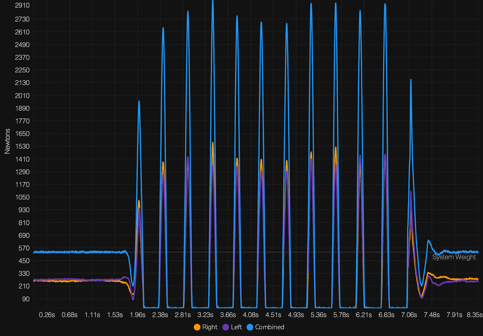
Figure 2.0. Multi-Rebound (MR 10/3) jump force-time curve. Best repetition of the day, selected according to the Top 3 Jumps Avg. RSI (calculated from jump height)
If evaluation stopped at CMJ and MR, one might conclude that, eight years on, the left ankle joint complex had largely recovered in terms of function at the system level. However, both tests are system-level stretch-shortening cycle (SSC) tasks with relatively long contact times (especially when the athlete needs to regress intent in the early stage of rehabilitation). They allow: redistribution of work across hip, knee, and ankle joints; sharing of load between limbs in bilateral conditions; and use of elastic energy and technical skill to mask subtle joint-specific deficits (Flanagan, 2007; Flanagan and Comyns, 2008; Pedley et al., 2020).
They are commonly used to monitor global neuromuscular status and can be informative at the system level, but they cannot guarantee that every individual component of the system is functioning optimally (Hori et al., 2009; Warr et al., 2020).
Joint-Specific Deficits Identified by the Kneeling Plantar-Flexor Test
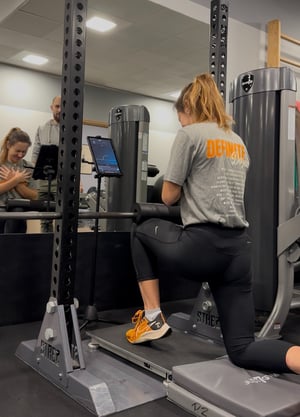
A different picture emerged when authors used a more targeted assessment: a half-kneeling unilateral isometric ankle push on the force plate, conceptually aligned with the Kneeling Isometric Plantar Flexor Test (KIPFT) described in professional youth football by McMahon et al. (2023).
In this test, the athlete kneels with the test foot on the plate, knee flexed and ankle dorsiflexed, and is instructed to “push the ground away as hard and as fast as possible” against an immovable setup. This position: targets the triceps surae-Achilles complex in a joint configuration similar to the loaded positions seen during acceleration, cutting, and landing (Kovacs, 2006; Kovacs, 2007; Uzu et al., 2009); reduces the degrees of freedom available for compensation, and allows close inspection of plantar-flexor force-time behavior (McMahon et al., 2023; Ripley et al., 2025).
By placing the athlete in a half-kneeling position with the hip and the knee flexed to 90 degrees, the gastrocnemius (which crosses the knee) is mechanically disadvantaged via active insufficiency. This forces the soleus to become the primary generator of plantar flexion torque. The soleus makes a substantial contribution to vertical propulsion in running and jumping (Finni et al., 2023) and may be particularly susceptible to neural inhibition in chronic Achilles tendinopathy (Fernandes et al., 2025).

Figure 3.0. KIPFT testing procedure
A key methodological advantage in this case was the very clean, quiet phase before each contraction: several hundred milliseconds of stable system weight with minimal noise. That flat baseline improves onset detection and reduces variability in early-phase metrics - crucial when the focus is on the first 100 and 200 ms of contraction (Hori et al., 2009; Maffiuletti et al., 2016; Ripley et al., 2025).
During this kneeling plantar-flexor test, the left limb showed a coherent pattern of deficits: Peak force: 10% lower on the left side; Force at 100 ms and 200 ms (F100, F200): 31-32% lower on the left; Impulse over 0-100 ms and 0-200 ms: 24-29% deficits; Time to peak force: 33% longer on the injured side.

Figure 3.1. Asymmetry report for the Kneeling Isometric Plantar Flexor Test. Summary of asymmetry metrics across the 3×5″ isometric protocol, with results presented as daily mean values
The injured plantar-flexors could eventually produce respectable force, but they did so more slowly and with markedly reduced early-phase output. Compared with the almost symmetrical CMJ and MR outcomes, this is a striking discrepancy: at the joint-specific level, the left Achilles complex still behaves like a weaker, more cautious engine.
The consistency across metrics is important. Early force, early impulse, and time to peak force all point in the same direction, reinforcing the conclusion that it seems like functional impairments rather than random variability (Maffiuletti et al., 2016; McMahon et al., 2023; Ripley et al., 2025).
Rationale for Using Force and Impulse at 100-200 ms as Proxies for Explosive Capacity
Rate of force development (RFD) is often presented as a key explosive-strength metric, but in practice it is difficult to measure reliably: RFD calculations depend heavily on how contraction onset is defined and are very sensitive to small fluctuations in baseline “quiet” force (Maffiuletti et al., 2016); early-phase RFD windows (0-50 ms, 0-100 ms) in particular tend to show large coefficients of variation (CV%), especially in plantar-flexor tasks and lower-limb isometrics (Maffiuletti et al., 2016; Martinopoulou et al., 2022; McMahon et al., 2023).
Several studies have reported that peak force tends to be more stable than RFD, and that RFD reliability can range from excellent to poor depending on the time window and analysis method (Maffiuletti et al., 2016; Warr et al., 2020; McMahon et al., 2023; Ripley et al., 2025). As a result, many authors have proposed using force at fixed time points (e.g., 100 ms, 150 ms, 200 ms) or impulse over the same windows as more robust proxies of early explosive capacity (Hori et al., 2009; Maffiuletti et al., 2016; Pedley et al., 2020; McMahon et al., 2023; Ripley et al., 2025).
Pilot data in this case mirrored that literature: RFD metrics did not meet our internal coefficient of variation (CV%) criteria, whereas F100, F200, and early impulse did. These time-point measures capture the same underlying quality - how much force the athlete can produce quickly - but with substantially less statistical noise. If F100 and F200 improve, RFD would be expected to improve as well, but the authors avoid amplifying errors by dividing by very small time intervals.
From a practical coaching perspective, these metrics are also easier to interpret: “the left leg produces ~30% less force at 100 ms” is clearer and more actionable than “RFD is lower by X N·s.”
Demands of Tennis Locomotion: The 150-200 ms Ground-Contact Window
The focus on 100 and 200 ms is not arbitrary. It reflects the time constraints of tennis locomotion.
Across running and field sports: at maximal sprinting speed, ground contact times are often <100 ms (Weyand et al., 2000; Haugen et al., 2019); at submaximal running speeds (around 4-5 m/s), contacts are commonly reported around 200 ms (Haugen et al., 2019); classic “fast SSC” actions - top-speed running, drop jumps, fast hops - are typically characterized by contact times below 250 ms (Flanagan, 2007; Flanagan and Comyns, 2008).
Tennis involves frequent fast SSC actions within most rallies. The critical components include: the split step, which pre-loads the lower limbs so the player can explode in any direction as the opponent strikes the ball; short linear accelerations over 3-5 m, where speed must be generated quickly from near-static positions; lateral and diagonal shuffles and crossover steps involving repeated braking and re-acceleration in multiple planes.
In these movements, contact times are typically reported around 150-200 ms - long enough for the Achilles to contribute meaningfully, but too short for leisurely force development (Kovacs, 2006; Kovacs, 2007; Uzu et al., 2009; Mecheri et al., 2019). Strength and conditioning guidance for fast SSC training often targets ground contacts around 180-220 ms for exactly this reason (Flanagan and Comyns, 2008; Pedley et al., 2020).
Overlay this with the mechanical demands on the Achilles tendon. During linear and multi-directional jumping and running, the plantar-flexors can experience forces several times bodyweight (Weyand et al., 2000; Devaprakash et al., 2022; Finni et al., 2023), and tennis adds substantial medial-lateral components during wide shots, lunges, and recovery steps (Kovacs, 2006; Mecheri et al., 2019).
Within this context, a ~30% deficit in F100/F200 and a prolonged time to peak force in the injured limb are not merely laboratory curiosities. These variables have direct ecological relevance to on-court demands. They speak directly to the time window in which the tendon must support the musculoskeletal system in creating impulses for: the first step after the split; lateral chases and shuffles; recovery steps back to center court; and emergency stops and lunges.
Where ground contact lasts ~150-200 ms, the ability to generate force quickly becomes a key performance determinant.
Persistent Neurobiological Adaptations After Chronic Achilles Tendinopathy
Perhaps the most clinically relevant aspect of this case is that all the deficits described above are present despite the absence of pain following HSR. This is consistent with a growing body of research showing that symptoms, structure, and function are only loosely correlated in tendinopathy (Cook and Purdam, 2009; Cook et al., 2016; McCreesh et al., 2013; Malliaras et al., 2015; Malliaras and O’Neill, 2022).
Studies in runners with mid-portion Achilles tendinopathy have demonstrated: increased intracortical inhibition of the triceps surae, and bilateral reductions in plantar-flexor endurance.
Even when only one tendon is symptomatic (Fernandes et al., 2021). Other work in chronic tendinopathy and persistent musculoskeletal pain has identified reduced plantar-flexor strength and impaired rate of torque development, with explosive measures often more sensitive to functional limitation than maximal strength (Maffiuletti et al., 2016; Vallance et al., 2025).
Collectively, these findings support a model in which chronic tendon pain: up-regulates inhibitory circuits in the brain and spinal cord; reduces neural drive to the affected muscle-tendon unit; and can leave a persistent deficit in explosive performance that outlasts the pain itself (Rio et al., 2015; Fernandes et al., 2021; Vallance et al., 2025).
Our athlete’s profile is consistent with this model. Years of intermittent Achilles pain likely taught her nervous system that full-throttle plantar-flexor recruitment on the left side was unsafe. HSR has addressed tissue load tolerance and pain, in line with clinical trials and reviews showing its effectiveness (Beyer et al., 2015; Radovanović et al., 2022; Kim et al., 2023), but removing pain does not automatically reset the “neuroprotective governor” that has been in place for years.
The systematic reductions in F100, F200, early impulse, and the prolonged time to peak force may be interpreted as the neuro-mechanical footprint of this history. The hardware (tendon and muscle) now appears more robust; the neuromuscular system appears to retain a more conservative control strategy (Finni et al., 2023; Fernandes et al., 2025).
Methodological Considerations: High-Frequency Sampling and a Stable Quiet Phase
When the variables of interest live in the first 100-200 ms of contraction, data quality becomes critical.
Methodological work on force-plate testing recommends sampling frequencies of at least 500-1000 Hz for explosive actions, particularly when timing and early-phase characteristics are being evaluated (Hori et al., 2009; Maffiuletti et al., 2016; Warr et al., 2020; Ripley et al., 2025). Lower sampling can: underestimate peak forces and early RFD; distort the shape of the force-time curve; and make onset detection highly sensitive to noise (Hori et al., 2009; Maffiuletti et al., 2016).
At 1000 Hz, the first 100 ms of contraction are represented by 100 data points; at 200 Hz, only 20. When specialists try to detect a 20-30% difference in F100 between limbs, resolution directly influences whether a real asymmetry can be reliably observed.
In our data, the combination of a 1000 Hz sampling rate and an exceptionally stable quiet phase meant that onset detection was sharp and early-phase metrics were comparatively low-noise. This gives reasonable confidence that the observed asymmetries are genuine and not artifacts of measurement error (Hori et al., 2009; Maffiuletti et al., 2016; Ripley et al., 2025).

Figure 3.2. Kneeling Isometric Plantar Flexor Test - healthy limb force-time curve. Best repetition of the day for the non-injured limb, included to illustrate the stability of the quiet phase prior to contraction onset detection
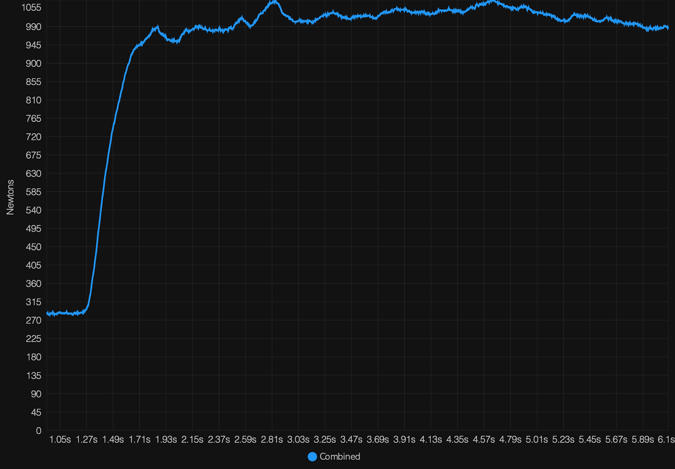
Figure 3.3. Kneeling Isometric Plantar Flexor Test - affected limb force-time curve. Best repetition of the day for the injured limb, included to illustrate the stability of the quiet phase prior to contraction onset detection
Interpreting Symmetrical Jump Data in the Presence of Joint-Specific Deficits
It would be easy to look at the symmetrical CMJ and MR results alongside the impaired kneeling plantar-flexor profile and assert that the jump tests simply reflect compensatory strategies. That may ultimately prove to be the case, but on the basis of kinetic data alone it remains speculative.
Force plates tell us what happens at the interface between the athlete and the ground. They do not reveal how individual joints share the work. To claim compensation, practitioners would need kinematic evidence - for example, 3D motion capture or detailed video - showing that the athlete is increasing hip or knee contribution, altering joint angles, or changing timing on the left side to protect the ankle (Pedley et al., 2020; Warr et al., 2020).
What the data do allow us to state confidently is that: the joint-specific explosive capacity of the left plantar-flexors is substantially reduced; and the athlete nonetheless produces symmetrical system-level output in jump tasks.
Whether that symmetry is achieved through sophisticated re-organization or simply because CMJ and MR are less sensitive to achilles-specific deficits is an open question. The jump tests are not “wrong”; they are just incomplete on their own.
Rehabilitation Priorities: Integrating Tissue Load, Explosive Strength, and Tennis-Specific Demands
Taken together, the findings suggest that further rehabilitation and performance training should be built around a deliberate blend of:
Ongoing Heavy Slow Resistance (HSR)
This component maintains and, where possible, continues to improve tendon architecture and high-force, low-velocity capacity (Beyer et al., 2015; Yeh et al., 2021; Devaprakash et al., 2022; Radovanović et al., 2022; Kim et al., 2023) and supports long-term load tolerance and symptom control (Demangeot et al., 2025; Trybulski et al., 2024).
The HSR limitation: HSR primarily targets tendon loading and maximal force capabilities, but because the contractions are slow (4-8 seconds per phase), they do not directly challenge the rapid depolarization rates required to overcome cortical inhibition during ballistic movements (Maffiuletti et al., 2016; Malliaras and O’Neill, 2022; Demangeot et al., 2025). In practical terms, this approach may enhance maximal force but does not necessarily address the ability to express force rapidly.
High-velocity loading with rapid force rise and higher angular velocities
Fast overcoming isometrics in dorsiflexed positions, cueing maximal intent in the first milliseconds of contractions (Maffiuletti et al., 2016; Ripley et al., 2025).
Progressive extensive-to-intensive plyometrics in linear, vertical and lateral directions - bilateral and unilateral pogos, low-amplitude hops, lateral bounds (“skaters”) - with explicit emphasis on shorter and shorter ground contact times, guided by fast SSC principles (Flanagan and Comyns, 2008; Flanagan, 2007; Haugen et al., 2019).
Tennis-specific accelerations and decelerations: split-step progressions, 5-10 m sprints, and multi-directional shuttles that encourage the left limb to contribute aggressively within realistic contact windows (Kovacs, 2006; Kovacs, 2007; Uzu et al., 2009; Filipčič et al., 2017; Mecheri et al., 2019).
Regular monitoring with the KIPFT
Using F100, F200, 0-100/0-200 ms impulse, and time to peak force as primary key performance indicators (Hori et al., 2009; Maffiuletti et al., 2016; McMahon et al., 2023; Ripley et al., 2025).
Interpreting trends in these metrics alongside on-court workload and performance.
The fact that time to peak force is also clearly asymmetric - and aligns with the early-phase deficits - reinforces the need to target not only how much force the left side can eventually generate, but how quickly it can get there.
Clinical Implications: Distinguishing Pain Resolution from Functional Recovery
This case illustrates an important principle in contemporary sports medicine and performance science: “pain-free” is not synonymous with “fully recovered” (Cook and Purdam, 2009; Cook et al., 2016; McCreesh et al., 2013; Malliaras et al., 2015; Malliaras and O’Neill, 2022). HSR has successfully addressed pain and load tolerance, but the force-plate data show that the neuromuscular system still carries the imprint of a long-running injury (Beyer et al., 2015; Radovanović et al., 2022; Kim et al., 2023).
CMJ and MR testing demonstrated that, at a global level, the athlete can produce symmetrical output. The kneeling plantar-flexor test revealed that at the joint-specific level, the Achilles complex is still lagging behind in exactly the time window that matters most for tennis locomotion (Flanagan and Comyns, 2008; Kovacs, 2006; Mecheri et al., 2019).
The broader lesson is methodological as much as clinical. A robust evaluation of readiness and function requires: clinical insight into history and symptoms; a sport-specific understanding of what the athlete must do on the court; and high-quality kinetic diagnostics that are sensitive to the relevant time scales and joint actions (Haugen et al., 2019; Ohio State University Wexner Medical Center, 2017).
When those elements are combined, hidden deficits - like the delayed left ankle joint seen here - can be identified and targeted rather than left to compromise performance or increase risk quietly in the background.
Reliance solely on global metrics like CMJ symmetry or single-trial observations could have led to clearance for return to play in this case, with a risk of performance decrements or injury recurrence. By utilizing isolated constraints, selecting reliable, time-locked metrics, and leveraging high-frequency sampling, authors unveiled a persistent asymmetry in plantar-flexor performance - a “silent handbrake” on explosive function (Hori et al., 2009; Maffiuletti et al., 2016; McMahon et al., 2023; Ripley et al., 2025). This is not merely a case of a weak calf. It is a case of a nervous system that has adapted in a protective manner and is likely to require targeted retraining (Rio et al., 2015; Fernandes et al., 2021; Vallance et al., 2025).
The athlete in this case is not just “back from injury”; she is now the subject of a focused fine-tuning process aimed at restoring more symmetrical explosive function in that crucial 150-200 ms window. Remodeling degenerative tendon tissue is generally considered a biological process that spans at least several months rather than weeks (Cook and Purdam, 2009; Cook et al., 2016; Radovanović et al., 2022; Demangeot et al., 2025). The athlete must understand that “pain-free” is merely the start of the performance rehabilitation phase. If that process is successful, the outcome will be more than an absence of pain: it will be a lower limb once again capable of meeting the demands of modern tennis at full speed and with minimal hesitation.
References:
- Ardern, C.L. et al. (2016) ‘2016 consensus statement on return to sport from the First World Congress in Sports Physical Therapy, Bern’, British Journal of Sports Medicine, 50(14), pp. 853-864.
- Beyer, R., Kongsgaard, M., Hougs Kjær, B., Øhlenschlæger, T., Kjær, M. and Magnusson, S.P. (2015) ‘Heavy slow resistance versus eccentric training as treatment for Achilles tendinopathy: a randomized controlled trial’, The American Journal of Sports Medicine, 43(7), pp. 1704-1711.
- Cook, J.L. and Purdam, C.R. (2009) ‘Is tendon pathology a continuum? A pathology model to explain the clinical presentation of load-induced tendinopathy’, British Journal of Sports Medicine, 43(6), pp. 409-416.
- Cook, J.L., Rio, E., Purdam, C.R. and Docking, S.I. (2016) ‘Revisiting the continuum model of tendon pathology: what is its merit in clinical practice and research?’, British Journal of Sports Medicine, 50(19), pp. 1187-1191.
- Demangeot, Y., Bohm, S., Mersmann, F. and Arampatzis, A. (2025) ‘Exercise parameters to consider for Achilles tendinopathy’, British Journal of Sports Medicine, 59(19), pp. 1337-1339.
- Devaprakash, D., Obst, S.J., Lloyd, D.G., Kennedy, B., Barrett, R.S. and Lichtwark, G.A. (2022) ‘Free Achilles tendon strain during selected rehabilitation, locomotor, jumping and landing tasks’, Journal of Applied Physiology, 132(4), pp. 956-965.
- Fernandes, G.L., Orssatto, L.B.R., Shield, A.J. and Trajano, G.S. (2021) ‘Runners with chronic mid-portion Achilles tendinopathy have greater triceps surae intracortical inhibition than healthy controls’, Scandinavian Journal of Medicine & Science in Sports, 31(9), pp. 1423-1434.
- Fernandes, G.L., Orssatto, L.B.R., Shield, A.J. and Trajano, G.S. (2025) ‘Is soleus intrinsic motor neuron excitability contributing to motor deficits in runners with Achilles tendinopathy?’, European Journal of Applied Physiology, 125(2), pp. 345-356.
- Fernández Jaén, T.F. and Guillén García, P. (2017) ‘Criterios para la vuelta al deporte tras una lesión: más allá del tiempo de baja’, Archivos de Medicina del Deporte, 34(177), pp. 40-44.
- Filipčič, A., Leskošek, B., Munivrana, G., Ochiana, G. and Filipčič, T. (2017) ‘Differences in movement speed before and after a split-step between professional and junior tennis players’, Journal of Human Kinetics, 55, pp. 117-125.
- Finni, T., Peltonen, J., Cronin, N.J. and Stenroth, L. (2023) ‘Towards a modern understanding of the Achilles tendon: structure, function and adaptation’, Journal of Biomechanics, 153, 111457.
- Flanagan, E.P. (2007) ‘An examination of the slow and fast stretch-shortening cycle in cross-country skiers and runners’, International Journal of Sports Physiology and Performance, 2(1), pp. 51-63.
- Flanagan, E.P. and Comyns, T.M. (2008) ‘The use of contact time and the reactive strength index to optimize fast stretch-shortening cycle training’, Strength and Conditioning Journal, 30(5), pp. 32-38.
- Habets, B., van Cingel, R., Backx, F. and Huisstede, B. (2018) ‘Return to sport in athletes with midportion Achilles tendinopathy: a qualitative systematic review regarding definitions and criteria’, Sports Medicine, 48(3), pp. 705-723.
- Haugen, T., McGhie, D. and Ettema, G. (2019) ‘The training and development of elite sprint performance: an integration of scientific and best practice literature’, Sports Medicine, 49(12), pp. 1781-1799.
- Hawker, G.A., Mian, S., Kendzerska, T. and French, M. (2011) ‘Measures of adult pain: Visual Analog Scale for Pain (VAS Pain), Numeric Rating Scale for Pain (NRS Pain), McGill Pain Questionnaire (MPQ), Short-Form McGill Pain Questionnaire (SF-MPQ), Chronic Pain Grade Scale (CPGS), Short Form-36 Bodily Pain Scale (SF-36 BPS), and Measure of Intermittent and Constant Osteoarthritis Pain (ICOAP)’, Arthritis Care & Research, 63(S11), pp. S240-S252.
- Hori, N., Newton, R.U., Kawamori, N., McGuigan, M.R., Kraemer, W.J. and Nosaka, K. (2009) ‘Reliability of performance measurements derived from ground reaction force data during countermovement jump and the influence of sampling frequency’, Journal of Strength and Conditioning Research, 23(3), pp. 874-882.
- Kim, M., Bae, J., Park, B., Park, J., Lee, S. and Kim, J. (2023) ‘Effects of exercise treatment on functional outcome parameters in mid-portion Achilles tendinopathy: a systematic review’, Frontiers in Sports and Active Living, 5, 1144484.
- Kovacs, M.S. (2006) ‘Applied physiology of tennis performance’, British Journal of Sports Medicine, 40(5), pp. 381-386.
- Kovacs, M.S. (2007) ‘Tennis physiology: training the competitive athlete’, Sports Medicine, 37(3), pp. 189-198.
- Maffiuletti, N.A., Aagaard, P., Blazevich, A.J., Folland, J., Tillin, N. and Duchateau, J. (2016) ‘Rate of force development: physiological and methodological considerations’, European Journal of Applied Physiology, 116(6), pp. 1091-1116.
- Malliaras, P., Cook, J.L., Purdam, C.R. and Rio, E. (2015) ‘Patellar tendinopathy: clinical diagnosis, load management, and advice for challenging case presentations’, Journal of Orthopaedic & Sports Physical Therapy, 45(11), pp. 887-898.
- Malliaras, P. and O’Neill, S. (2022) ‘Physiotherapy management of Achilles tendinopathy: a state-of-the-art review’, Journal of Physiotherapy, 68(1), pp. 1-12.
- Martinopoulou, K., Bogdanis, G.C., Terzis, G., Karatrantou, K. and Donti, O. (2022) ‘Evaluation of the isometric and dynamic rates of force development during a leg press task: associations with jumping performance’, Journal of Human Kinetics, 82, pp. 137-148.
- McCreesh, K., Lewis, J. and Riley, S. (2013) ‘Continuum model of tendon pathology - a clinical perspective’, International Musculoskeletal Medicine, 35(3), pp. 75-79.
- McMahon, J.J., Ripley, N., Lake, J.P. and Comfort, P. (2023) ‘The kneeling isometric plantar flexor test: preliminary reliability and feasibility in professional youth football’, Journal of Functional Morphology and Kinesiology, 8(2), 50.
- Mecheri, S., Laffaye, G., Triolet, C., Leroy, D., Dicks, M., Choukou, M.A. and Benguigui, N. (2019) ‘Relationship between split-step timing and leg stiffness in world-class tennis players when returning fast serves’, Journal of Sports Sciences, 37(17), pp. 1962-1971.
- Ohio State University Wexner Medical Center (2017) Tendinopathy Clinical Practice Guideline. Columbus, OH: OSUWMC.
- Pedley, J.S., Lloyd, R.S., Read, P.J., Moore, I.S. and Oliver, J.L. (2020) ‘A novel method to categorise stretch-shortening cycle function during a drop jump using the force-time curve’, Journal of Sports Sciences, 38(16), pp. 1878-1887.
- Radovanović, G., Kunz, M., Bohm, S. and Mersmann, F. (2022) ‘Evidence-based high-loading tendon exercise for 12 weeks leads to increased tendon stiffness and cross-sectional area in Achilles tendinopathy: a controlled clinical trial’, Sports Medicine - Open, 8, 22.
- Rio, E., Kidgell, D., Purdam, C., Gaida, J., Moseley, G.L., Pearce, A.J. and Cook, J. (2015) ‘Isometric exercise induces analgesia and reduces inhibition in patellar tendinopathy’, British Journal of Sports Medicine, 49(19), pp. 1277-1283.
- Ripley, N., Fahey, J., Williams, J., Smith, L., Ross, S., Bramah, C. and Comfort, P. (2025) ‘Standardization and utilization of lower limb single joint isometric force plate assessments and recommendations for future research’, Standards, 5(4), 30.
- Silbernagel, K.G. and Crossley, K.M. (2015) ‘A proposed return-to-sport program for patients with midportion Achilles tendinopathy: rationale and implementation’, Journal of Orthopaedic & Sports Physical Therapy, 45(11), pp. 876-886.
- Silbernagel, K.G., Hanlon, S. and Sprague, A. (2020) ‘Current clinical concepts: conservative management of Achilles tendinopathy’, Journal of Athletic Training, 55(5), pp. 438-447.
- Trybulski, R., Pasternok, M., Dębiec-Bąk, A., Fatyga, M., Szeliga, E. and Bac, A. (2024) ‘Effectiveness of kinesiotherapy in the treatment of Achilles tendinopathy’, Sports, 12(2), 202.
- Uzu, R., Shinya, M. and Oda, S. (2009) ‘A split-step shortens the time to perform a choice reaction step-and-reach movement in a simulated tennis task’, Journal of Sports Sciences, 27(12), pp. 1233-1240.
- Vallance, P., Gainge, S., Taylor, J.L. and Schabrun, S.M. (2025) ‘Transcranial magnetic stimulation and electrical stimulations to study and rehabilitate persistent musculoskeletal pain’, Clinical Neurophysiology Practice, 10, pp. 1-12.
- Warr, D.M., Johnston, R.D., Baker, J.S. and Iberson, D.J. (2020) ‘Reliability of measurements during countermovement jump performance: influence of phase- and outcome-specific metrics’, Cogent Medicine, 7(1), 1843835.
- Weyand, P.G., Sternlight, D.B., Bellizzi, M.J. and Wright, S. (2000) ‘Faster top running speeds are achieved with greater ground forces, not more rapid leg movements’, Journal of Applied Physiology, 89(5), pp. 1991-1999.
- Wilk, K.E., Bagwell, M., Davies, G.J., Arrigo, C., Andrews, J.R. and Reinold, M.M. (2020) ‘Return to sport participation criteria following shoulder injury: a clinical commentary’, International Journal of Sports Physical Therapy, 15(4), pp. 624-642.
- Yeh, C.-H., Kotsifaki, A., Jales, G., Syme, G., Whiteley, R. and Yung, P.S.H. (2021) ‘Maximum dorsiflexion increases Achilles tendon force during exercise for midportion Achilles tendinopathy’, Scandinavian Journal of Medicine & Science in Sports, 31(8), pp. 1674-1682.