<img alt="" src="https://secure.office-insightdetails.com/788655.png" style="display:none;">
Skip to content
Elegant Summer Fashion Blog Banner Beige

The Ground Reaction: Force Data in ACL Rehab

Online Webinar
13th May
1PM AEST

How to use force plate data to make sharper, more confident return-to-sport decisions after ACL injury.

Most return-to-sport decisions in ACL rehab still lean heavily on time-based milestones, clinical feel, and a handful of jump tests. The data is often there, but it's not always being used to drive the decision.

This session is about closing that gap.

Join Dr Nico Furlan — Clinical Lead of the Athletic Performance Program at Jointli (St Leonards, Sydney) — for a practical, evidence-informed look at how force plate testing can sharpen decision-making across the ACL rehab continuum, from early-stage criteria through to clearance.

With a PhD in Applied Sports Science and experience spanning the Chinese Olympic Committee through to orthopaedic-integrated rehab at Jointli, Nico sits at the intersection of high performance and clinical practice — and brings both lenses to the conversation.

REGISTER FOR THE WEBINAR

Can’t attend live? We’ll send you the recording afterward.

YOUR PRESENTERS

1685427809498
DR. NICO FURLAN CLINICAL LEAD OF THE ATHLETIC PERFORMANCE PROGRAM AT JOINTLI

Nico has been an S&C coach for over 20 years. For the past four years, he has led a team of rehabilitation specialists at Jointli, a knee-focused clinic within Landmark Orthopaedics in Sydney.

JamesB&W-2
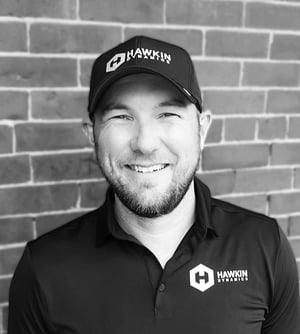
JAMES HANISCH MANAGING DIRECTOR ASIA-PACIFIC AT HAWKIN DYNAMICSJames Hanisch is the former Director of Performance Science at the Philadelphia Eagles in the NFL, the Sport Science Coordinator at the University of Oregon, and spent 8 years as a performance analyst in Aussie Rules football.

What you'll walk away with:


  • A clear testing roadmap — which force plate tests to use at each stage of rehab, and what each one is actually telling you
  • Confidence beyond jump height — how to read asymmetries, movement strategy, and force-time characteristics to detect risk the headline numbers miss
  • A decision-making framework — how to integrate force data into return-to-sport criteria alongside clinical and on-field markers
  • Better testing, not just more testing — protocols and coaching cues that make your data reliable enough to act on
  • Monday-morning application — practical principles you can take into your next session, not theory you'll forget by the end of the week